A Note to the North American Church

Dear Brothers and Sisters, 

Many parts of the Church around the world have lived with restricted freedoms (in tight, cramped spaces), yet they have done and continue to do the work of the Church in secret. The Church in their parts of the world is flourishing and multiplying, even while its individual members are suffering and dying.

In this part of the world, we (the Church in the northwestern hemisphere) have historically had much freedom to worship and serve as we felt God was leading us, living in wide open spaces. But the Church here is dying a slow death. Could it be that we have compartmentalized our faith to our Savior to one day of the week? Are we serving without charity? Could it be that we relied on “professional clergy” to serve us spiritual food and stand in the public arena to fight and defend the expansive spaces so we wouldn’t have to? Could it be that we have lost our ability to battle the way He calls us to battle?  

We find ourselves in ever-tightening spaces around us. There are increasing limits placed on our words and actions, especially when Truth differs from the beliefs fed to the masses. We must learn again to defend the open, wide spaces. They are disappearing quickly. And we must learn to fight in the narrow, tight spaces as our brothers and sisters have done.  We can no longer let others do the work we are called to do and we can no longer simply let things be for the sake of what we mistakenly call “peace.” We must relearn what it means to follow Christ and to live as He did. We are in a battle, but it is not the one we see with our eyes and it requires the battlegear given by our Commander. That gear starts with an undivided heart, eyes that see clearly, and ears that discern what the Spirit is saying.

Heavenly Father, Teach us to be the Church you called us to be – individually and corporately. Make me, make us, wise enough to listen to Your voice before we speak or act. Turn my heart, our hearts toward you. Make me, make us, bold enough to be humble when we we must speak, generous enough to share what You have given and brave enough to be obedient to Your plan, passionate enough to step into the gaps You reveal and loving enough to hold out a helping hand to those who cannot see their way. All the while help us keep our eyes wide open and our ears tuned to Your voice. In Jesus’ name, we ask.
Who has the best instructions for life?

It is important to listen to those who know more than I do. They have seen things and know things I don’t know. When I’m not sure how good the instructions are that I am receiving, I talk and listen to The One Who is the wisest and Who loves me. This One knows me and will be able to help me.

Hearing is an important component to being wise. Hearing is not the ability to simply hear with our ears. We hear with our eyes. Sometimes our eyes are better listeners that our ears. We hear with our brains. As information comes in, we think about how it fits with what we already know. And, we hear with our hearts. Information changes us and how we feel about things. Because all of this happens when we hear, it is important that we listen to the right information and the right messages.

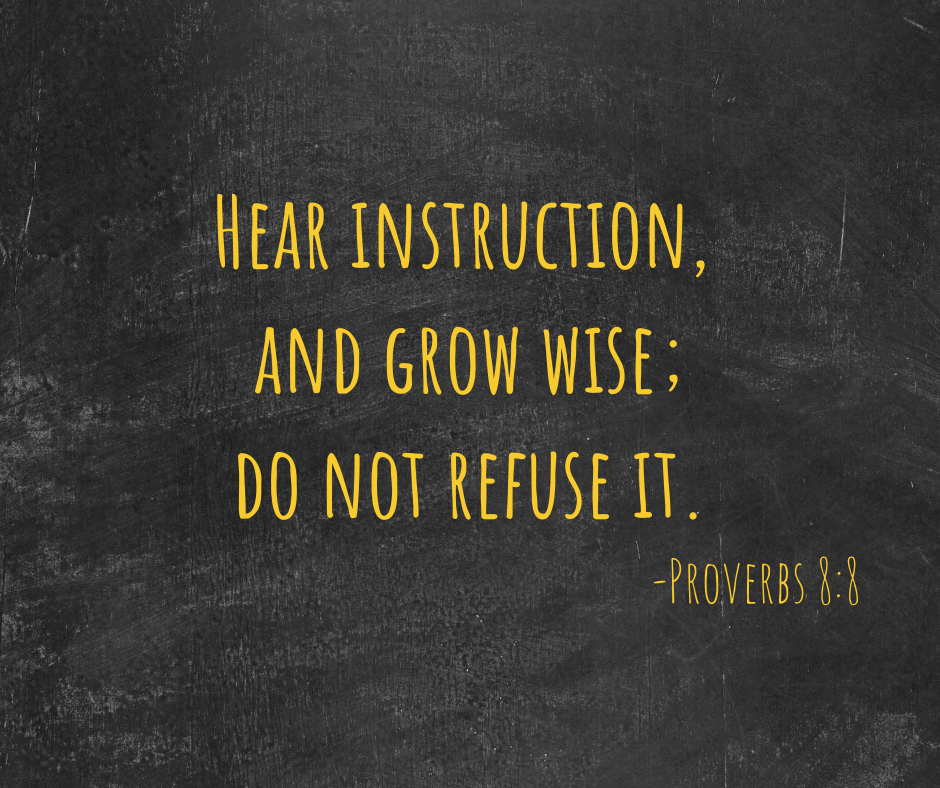
Instruction in the verse above doesn’t involved just hearing directions about how to do something. It also involves warnings and correction. Proverbs 8:8 reminds me of 2Timothy 3:16 where Paul wrote: All Scripture is given by inspiration of God and is profitable for doctrine, for reproof, for correction, and for instruction in righteousness. (2Timothy 3:16).

Doctrine is a part of our lives whether we think about it or not. What we believe about the world and how it operates, our worldview, is our doctrine. This information is the framework for how we live. It is like a roadmap for our life.

Sometimes we make mistakes. Sometimes we make wrong turns. Sometimes other people’s bad decisions create problems for us. When those things happen, we need someone to tell us we are on the wrong road or that there is danger ahead. These mistakes and wrong turns lead us away from our goal. That’s what reproof is: a warning that something is not right. Sometimes we sense these warnings without anyone saying them aloud to us. It’s that feeling in our own heart that something is wrong and we need to stop and reassess the situation we are in. Other times, these warnings come from an outside source. Someone who can see where the road we are on leads and knows the dangers ahead tells us.

Nearly every good reproof or warning comes with a suggestion for corrective action. These are like detour signs that help us get back onto the right road. We might thinking of them as GPS recalculating and rerouting directions. Most of the time, this corrective action means we must make a u-turn and go back to the place where we got off track. Sometimes, the corrective action requires more complicated directions. When we can trust the direction-giver, we know we can trust their directions.

Then, there’s vital information we need to know if we are traveling with others and want to navigate safely. These are the rules of the road and the turn by turn-by-turn directions given along the way. When we are listening and following these general instructions, we know we will eventually arrive safety without creating problems for ourselves or others and/or making the trip better for everyone. We hope everyone else on the road is following the rules of the road and their instructions as well.

Second Timothy 3:16 says that the Bible provides all of this for our lives. The doctrine (the map), reproofs (warnings), corrections (rerouting), and instructions (directions for living) were all give to us when God inspired men to write these things down. He wants us to travel and arrive safely at His home.

Heavenly Father, Help me hear Your instructions and grow a little wiser each day. I will never be as wise as You, so help me always hear with the intention of obeying Your directions. Help me make the corrections needed. And when I refuse to hear and obey, continually convict my heart until I make the u-turn I need to make so that my life is pleasing to You!

The bitter cold came…

And it’s been a long week. Feels like we lost time, just like in November when Covid hit the house. But what if it was something else?

What if it was . . .

  • . . . a pre-ordained rest period?
  • . . . a training ground for the future?
  • . . . a test to see what is deep within us, a way to help us see what or who we ultimately depend on when trials come?
  • . . . a time-out so emotions could calm and open opportunities for rational thoughts to come?
  • . . .a way to remind us that while the outside world whirls with chaos, conflict and controversy, our homes and our inner worlds don’t have to?
  • . . .a time to help us remember that silences allow spaces to process the voices vying for our attention?
  • . . . a reminder of how far we have moved from simple lives and simple times and an invitation to return?

Time spent those ways are never lost. In fact, they are very valuable.

Heavenly Father, whatever the reason . . . help me to learn the lesson that You had in it for me. Help me remember the lesson so I can move forward more equipped, more confident, more reliant on You.

20 Lessons from 2020

2019 was a preparation year of sequestering for me. There wasn’t a coronavirus nibbling away at breath and life across the planet, instead there was one precious life seeping away under my care. I am grateful for the lessons of 2019. They prepared me for 2020 and these lessons:

  1. When things are hard (emotionally, physically, mentally), be intentionally simple.
  2. Trust the m’at m’at (the “little by little”) of HIS plan, because HIS timing is perfect and HIS slow, steady pace over time creates great differences.
  3. Ask for help when you need it and then be amazed at how the request is answered. Early this year, God sent two Christian constant care nurses to stay with us at the end of Mom’s life: Angela and Veronica. Their names reminded me that HE knew my need. Angela means “messenger of God” and Veronica means “bearer of victory.” They were blessings to me.
  4. Sometimes what doesn’t seem like a big “win” for one is great victory for another.
  5. Slow leaks can create big problems.
  6. Meeting with brothers and sisters after being separated for a long time is joyful enough to make your face hurt.
  7. Always ask HIM first. HE never says, “Ask three and then ask me.” HE will answer, so listen.
  8. When a job is offered, cheerfully put on the apron and do the work. You will be glad you did.
  9. Check the foundation for underlying problems when it seems nothing is improving. When you are checking, bring an expert along with you.
  10. For a sense of accomplishment, build IKEA furniture.
  11. Ensure you are using the same vocabulary and definitions in order to truly communicate. If you change definitions midstream, tell your listener. Not telling is deceptive.
  12. Always carry a little cash – for when the bank freezes your card because of fraud and you are far from home.
  13. Recognize that you are a gift given by God to those around you (not in the creepy way). There are needs in the world that you were created to meet.
  14. Be aware of (but not distracted by) what you see and what you hear. Keep your eyes and ears on Truth.
  15. Learn to joyfully live in the sweet spot where there is no extra and nothing lacking. This means readily receiving and willingly releasing.
  16. Get away from what might cause you to stumble and fall.
  17. Look for patterns. They are everywhere. Understand the patterns and better understand what going on.
  18. Set a good example – even when you don’t need to or even want to. Others need to see things done correctly.
  19. Just stick with the truth. It’s just easier and it honors others.
  20. Ask this question in the kindest way when you are asked for information that you think might not be well received: “Do you really want the answer to that question?” If the answer is no, don’t elaborate (and don’t raise your eyebrow). If the answer is yes, answer respectfully, truthfully, and with kindness.

Lessons learned from a pencil

  • Stick together and stay sharp. It’s easier to stay sharp when you have friends in the box with you who are sharp, too.
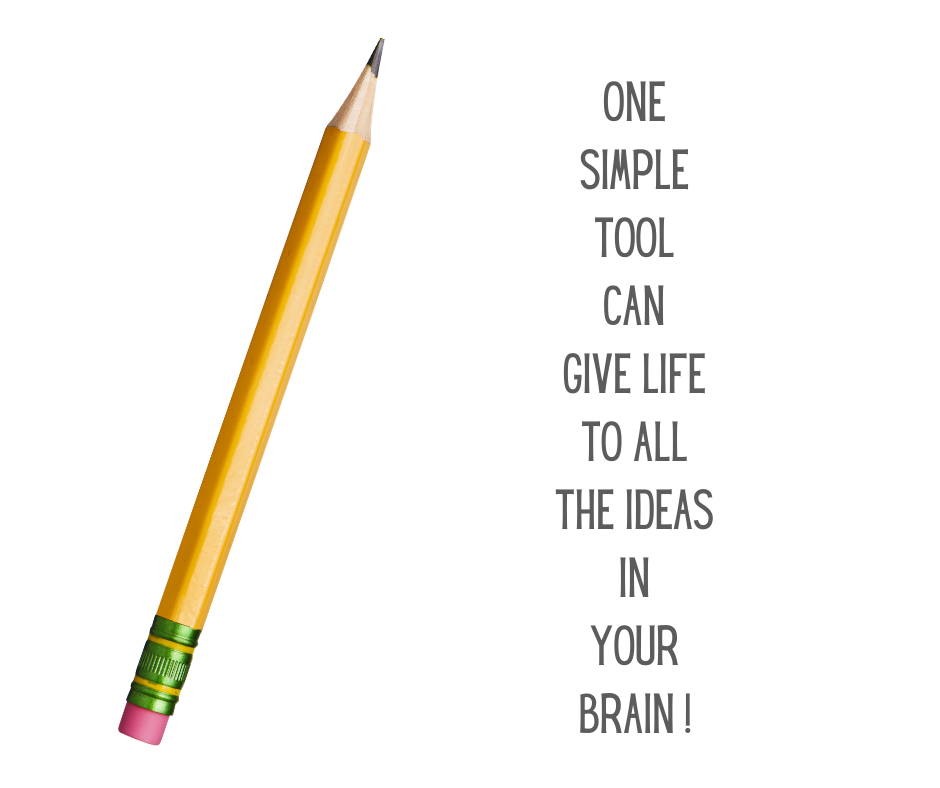
  • One simple tool can give life to all the ideas in your brain! Pencils have been making masterpieces for ages. When things get complicated, we should probably start back with the simpler things.
  • Don’t fret. Don’t compare. A dull point can be sharpened again.
  • Stay sharp but don’t hurt anyone! Don’t poke others. It’s not kind.
  • It takes all kinds to make a beautiful picture. Some things are black and white, but life is lived in color. Live a life that reflects all the light!
  • Always keep a few spares ready. Once in a while things will happen and you’ll be happy if you have a spare or two ready and willing to help. Spares might include pencils, ideas, or friends.
  • Don’t know? Ask someone who knows! Never be afraid to ask an honest question. If you need information, ask. If you need advice, ask. If you are curious, ask.
  • Don’t be afraid to stand out. In a world where many folks want to blend in, don’t be afraid to stand out. Just make sure you are standing out for the right thing.
  • Think. Then edit. It’s easier to make and keep friends if your words are edited to be kind and encouraging.
  • Little things can do great things! Most of the best ideas started with one tiny, quick thought that crossed someone’s mind and then was recalled to allow for deeper thinking.
  • Use all the colors in the box. Don’t limit yourself to a single color for drawing or a single perspective for making decisions.
  • Not all blues are the same. Each one has its own beauty. Every one is unique and even those who seem most like us are different from us.
  • Apologies may not completely erase mistakes but they give space to try again. Apologies are the first step to creating a place where we can try again.
  • Mistakes are opportunities to learn and find better solutions. Mistakes, when recognized by those responsible for them, can be the catalyst for better things. Mistakes help us learn what not to do – again.
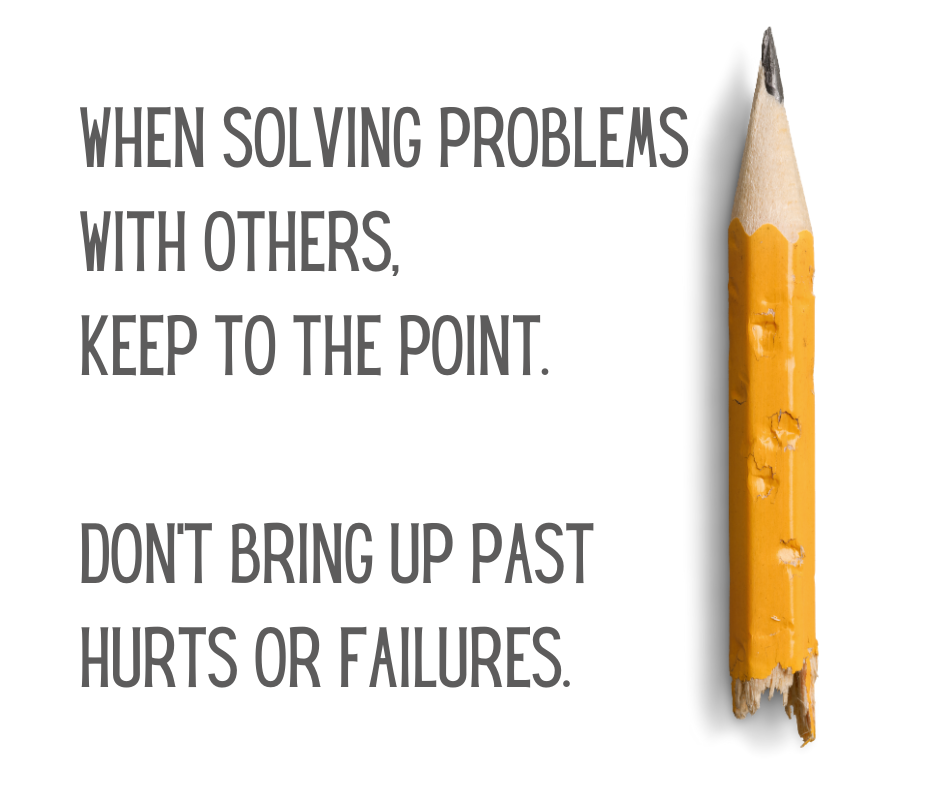
  • When solving problems with others, keep to the point. Don’t bring up past hurts or failures. It’s never a good idea to bring up the past to help solve a problem in the present.
  • Old dollars can still buy things and old pencils can still solve problems. Sometimes we get the idea in our mind that when things are old, they are useless. This is not true for lots of things, including dollars, pencils, and people.
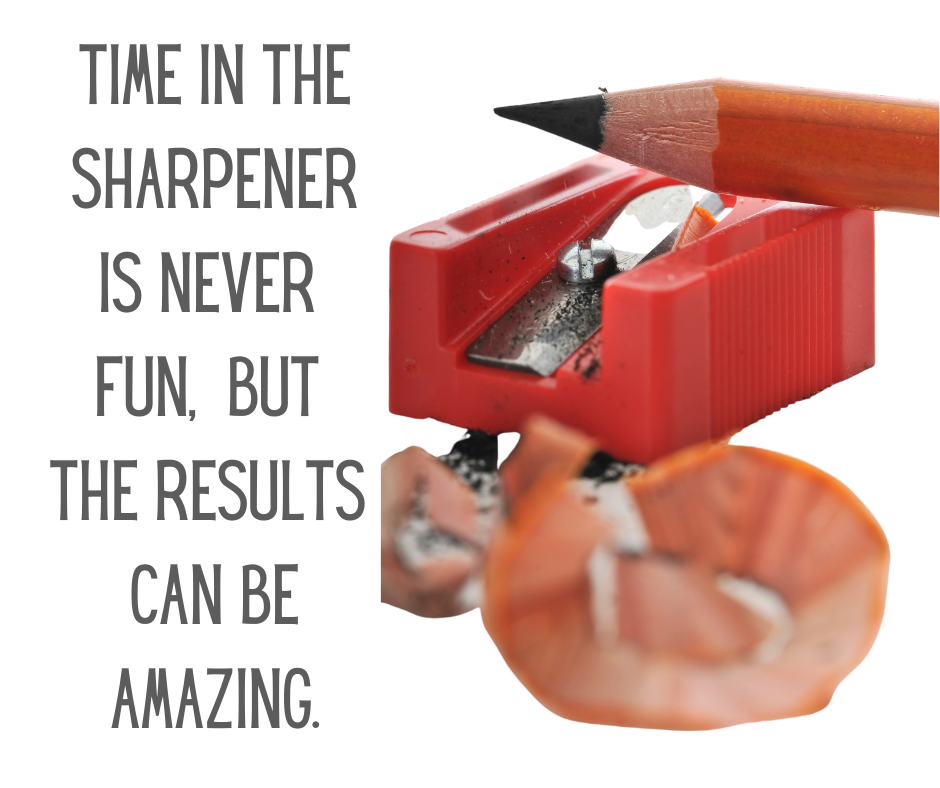
  • Time in the sharpener is never fun, but the results can be amazing. When you’ve used up all you have, taking sometime to recharge and learn more will make you sharp again!

Choose Intentionally

I’m still in the first parts of Genesis and have come to this conclusion:

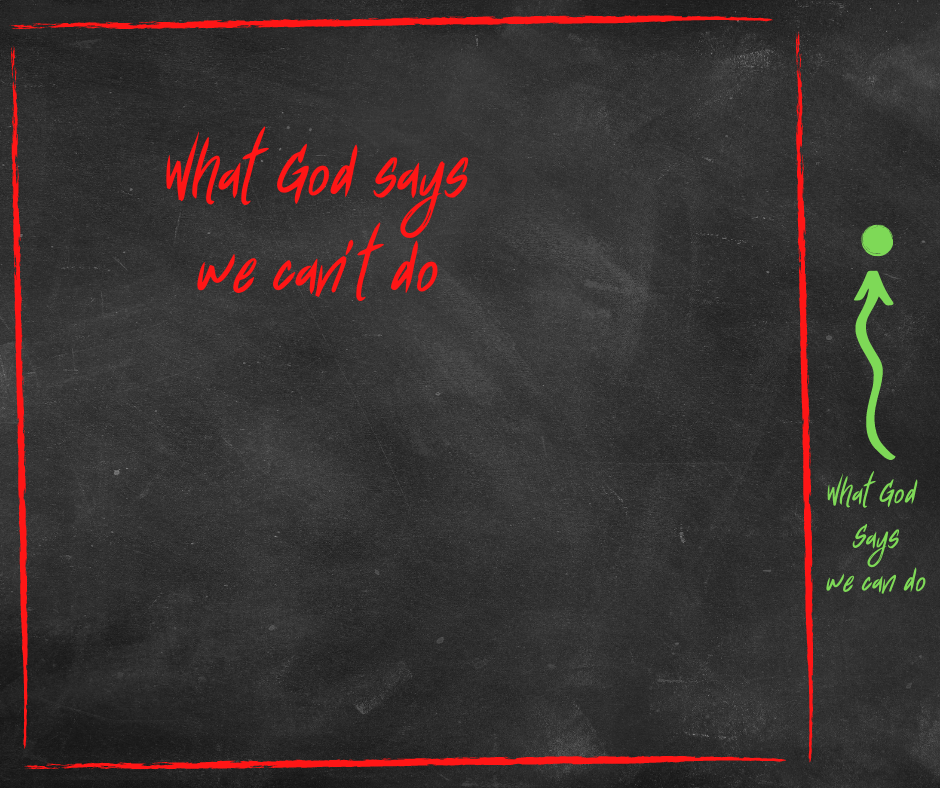
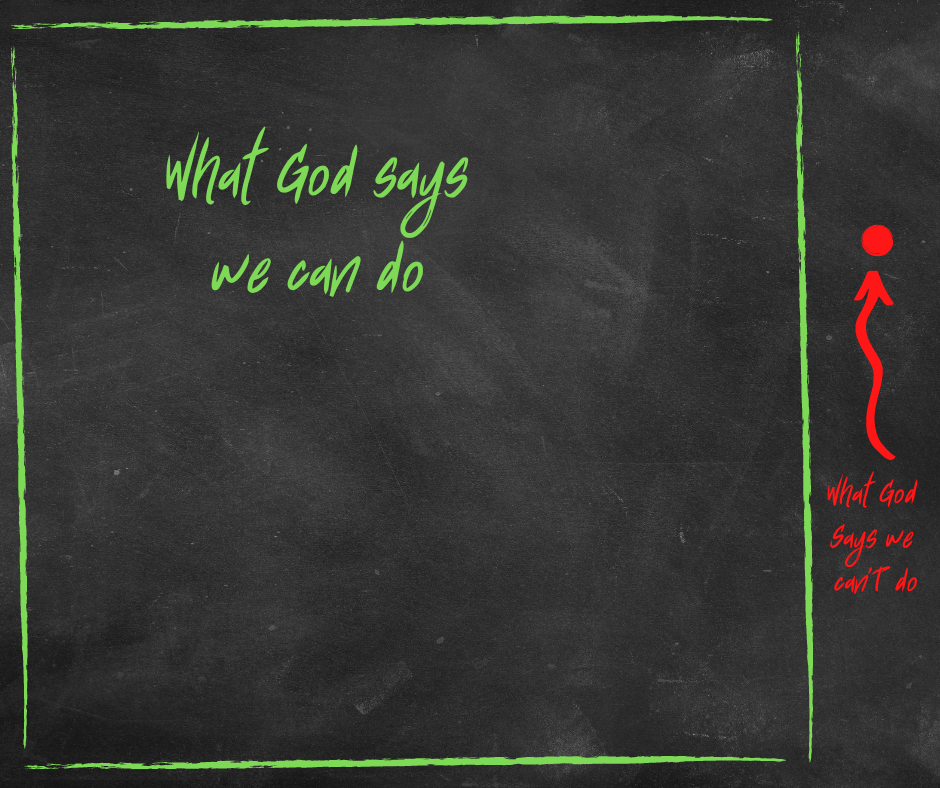
Many times we tend to think of the world God created and His rules like this:

When we look at the world this way, it doesn’t appear to be very free or joyful.

But in reality, God’s rules are much simpler. In Genesis, when He presented choices to Adam and Eve, He said, “You can have every green thing to eat, except this one.” And He explained why. “When you eat this one, you will die.”

The truth is:

  • We always have the opportunity to decide between what God says to do and what He says not to do.
  • Once we make a choice, it is easier to make the same choice when the opportunity arises again.
  • There are always consequences to our choices. Sometimes one of the consequences is that making a better choice can be painful.
  • The choices we make reflect what we believe about God and ourselves.
    • Do I trust His word?
    • Do I trust that He knows what I need and like?
    • Do I trust Him to give me what’s best for me and warn me about what’s not?
  • His “Not” list is purposeful. What’s on that list is deadly!
  • To make a better choices, decide who always tells the truth and listen to what that One has to say.

Let’s Talk about Light

It’s time to go back to Genesis and start reading again. Each time I return, I see something different that speaks to my heart.

Verse 2 of Genesis 1 – The earth was unformed and void, darkness was on the face of the deep, and the Spirit of God hovered over the surface of the waters. Look at all the descriptive words: unformed, void, darkness, deep. I went to my favorite concordance and found these notes:

  • Unformed comes from the root meaning to lie waste, a desolation. Figuratively speaking, this word means a worthless thing.
  • Void comes from the root to be empty and also describes a lack of thought or intelligence or an undistinguishable ruin. Lack of thought or intelligence? Empty-headed?
  • Darkness means literally dark or obscure. Figuratively speaking, it refers to misery, destruction, death, ignorance, sorrow, wickedness.
  • And deep? Think of an abyss covered with uncontrolled, surging water.

Have you ever visited this place? I have. Sometimes I arrived there because of my own choices. Sometimes others invited me to go along and I was too naive to refuse the invitation. And I’ve been dragged there a couple of times because of choices others made. No matter how we get there, it felts like a deep, dark hole full of nothing good. The reality is that there are plenty of these deep dark, worthless holes full of misery just waiting for us to step or fall into.

This is just the second verse of the Bible. But there’s hope! See the phrase that finishes the sentence? “And the Spirit of God was hovering over the waters” – those deep, dark waters.

He hovered. He moved in an ever-so-gently, relaxed way. He wasn’t in the deep. He wasn’t a part of the darkness. The desolate, empty, miserable, uncontrollable space didn’t bother Him. He was there, hovering, just above the fray – with a plan. His plan involved lighting things up.

Genesis 1:3 says “Then God said, ‘Let there be light’; and there was light.” In the space right above the darkness, He hovers and calls to us. “What can I do for you? My child, what do you want? Can I turn on the light for you?” Light can be scary because we see what is really there. What if our imaginations have gotten things right? What if things really are as bad as we feel and think they are?

But He knows we need light to see the truth of the situation and act in more thoughtful (less empty-headed?) ways. Misery and darkness will not move until the light is turned on. And when we let Him, He separates the darkness and light in our lives and calls us to walk in His light each step of the way.

Do you need light today? Simply ask Him for His light. “Heavenly Father and God Almighty, turn on the light. Let me see Truth. Help me walk in Light. Help me to deal with any darkness by moving closer to You and walking humbly with You.”

Do you know someone who needs the light turned on? You can ask for that too. He is hovering over the darkness where they are. “Almighty God, in the beginning, You said, “Light” and the light appeared. Speak light into the life of the one I love and help me respond as You do with mercy, grace, and truth as they begin to see the reality of their circumstances. Help me humbly walk in Your Light as well.”

about wisdom

No one wants to be intentionally stupid. At least in my mind, no one wants that. But how do you know if a decision is stupid or wise? This might help us know . . .

Let’s start by looking at the results of decisions already made. Who have those decisions helped? Who have they hurt? Were they right – and here I’m talking about whether or not they are equitable and just?

If the results of those decisions were helpful, equitable, just, then we’re probably good. If not, we need to make some better decisions quickly!! We don’t want to be stupid. (I hope.)

Dad Said . . .

Many of my friends have heard me say, “My dad always said. . . .” followed by a phrase or statement to help navigate difficult circumstances. Dad’s statements weren’t long or fancy, but they always made me think. And if I searched long enough, often I found a deeper truth in them. They were his versions of proverbs and important lessons he had learned in his own life.

Here are just a few: 

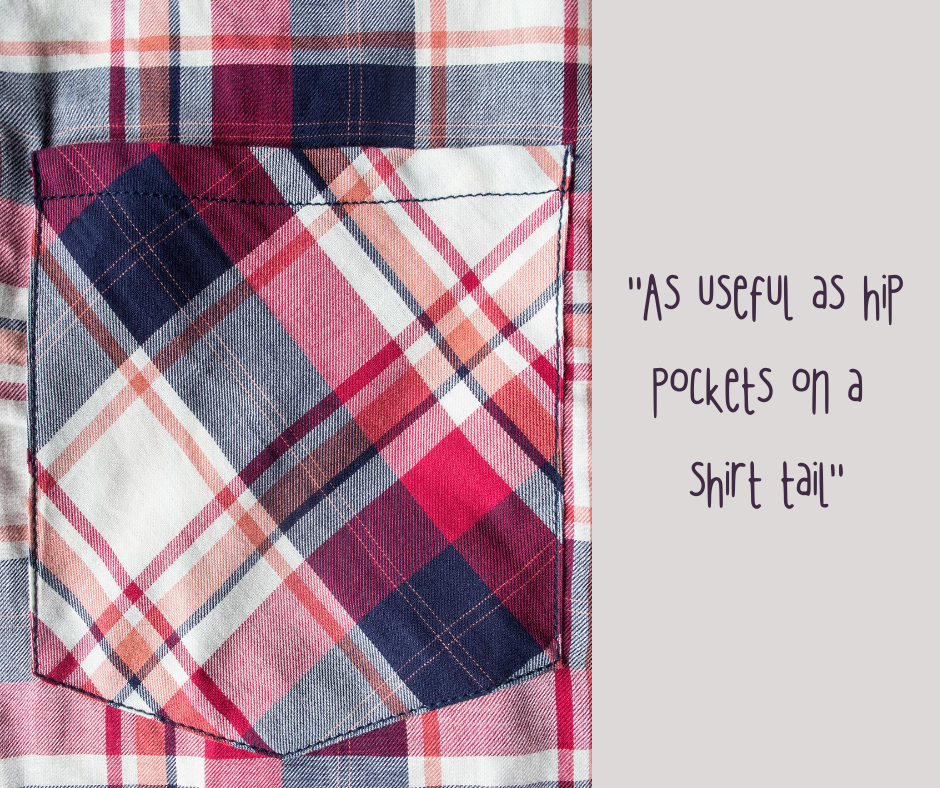
  • “That’s about as useful as hip pockets on a shirt tail.” – used to describe something that not helpful or just plain ridiculous
  • “We aren’t lookin’ back.” – describing what our focus should be as we leave a place that has been unpleasant or painful
  • “Don’t sweat the small stuff. Remember everything is small.” – a reminder that in the light of eternity, everything around us is small
  • “Nothing good happens after 10 o’clock at night.” – a warning to come home before curfew
  • “If you’re makin’ everyone happy, you’re doing something wrong” – a reminder that there will be times when people are unhappy with the decisions made. This has become one of my favorite phrases. Sometimes I heard it after I became disgruntled with a decision he or Mom had made. Other times, I heard it before he announced a decision he knew would result in grumbling somewhere. As I got older, his wise words described situations I found myself in as a supervisor, sometimes as a mother. It was Dad’s way to remind us that no one wants to make others unhappy, but if it happens, everything will be okay – eventually.

But there’s a deeper truth in the statement I learned later. If I make everyone happy all the time, it’s very possible I have lost my integrity.   

Happy birthday, Daddy!